Home Share On Social Media Do You Need A-Levels to...
Read More
UK students in 2026 need practical digital skills, not just degrees, to stay employable, adaptable, and competitive. The most important ones include AI literacy, data skills, cybersecurity awareness, digital communication, content creation, marketing, e-commerce knowledge, and critical thinking. These skills directly match what UK employers are hiring for and what future jobs require.
In today’s world, digital literacy is more important than ever. With technology advancing rapidly, students need to develop a wide range of digital skills to succeed in both school and their future careers. From learning how to use AI tools to understanding cybersecurity, these skills are essential for the students of tomorrow.
This article covers key areas of digital skills that every student should learn to be prepared for the future.
The UK workforce is rapidly shifting toward digital roles. Employers increasingly prioritise candidates who can use technology, analyse information, communicate online, and adapt to digital environments.
Studies indicate that around 82% of UK job listings require digital skills, while one in five workers still lack essential digital capabilities, creating a significant skills gap in the labour market.
Digital skills help students:
Students without these skills risk falling behind in both education and employment, especially as the UK continues investing in its digital economy and technology-driven workforce.
Artificial Intelligence is reshaping education, workplaces, and everyday life. Understanding how AI works and how to use AI tools responsibly is now a foundational skill.
Demand for AI and automation skills continues to grow as businesses across the UK adopt intelligent systems to improve productivity and decision-making.
AI literacy prepares students for careers in marketing, business, healthcare, technology, and finance.
Data is at the centre of modern decision-making. Students who can analyse and present data clearly stand out academically and professionally.
UK employers increasingly seek data-literate candidates as organisations rely on insights to drive business strategy and innovation.
Data skills are valuable across business, economics, science, and digital careers.
Modern communication happens online — through email, social media, and virtual platforms. Students must know how to present themselves professionally in digital spaces.
Employers consistently rank communication and digital collaboration among the most important employability skills for graduates entering the workforce.
Tips: Start a personal blog, LinkedIn portfolio, or YouTube channel.
With technology comes the need to protect yourself and your information. Cybersecurity is about keeping your data safe from hackers or online scams.
Here’s what students need to know:
By understanding cybersecurity, students can keep their personal information and digital lives safe from online threats.
Creating content is a valuable skill in today’s digital world. Whether it’s writing a blog post, creating a video, or making social media posts, students who can create engaging content will have an edge.
Here’s why content creation is important:
Learning how to create high-quality content and evaluate media will help students communicate better and use technology to their advantage.
In the world of digital marketing, knowing how to promote products or services online is key. This includes understanding how to use social media, websites, and email marketing.
Here’s how digital marketing can help students:
Understanding digital marketing and social media management can give students a competitive edge when it comes to future jobs or personal projects.
The digital economy is transforming how people earn, spend, and manage money. Students should understand online business and financial tools.
The rise of online marketplaces, freelancing, and digital entrepreneurship means financial literacy and e-commerce knowledge are now essential skills for young people entering the workforce.
Understanding e-commerce prepares students for freelancing, startups, and digital careers.
Critical thinking is about analysing information, making decisions, and solving problems logically. In today’s world, students also need to develop digital information literacy, which means knowing how to find, evaluate, and use information from the internet.
Here’s how critical thinking and digital information literacy can help:
By developing these skills, students will be able to make better decisions and use online information wisely.
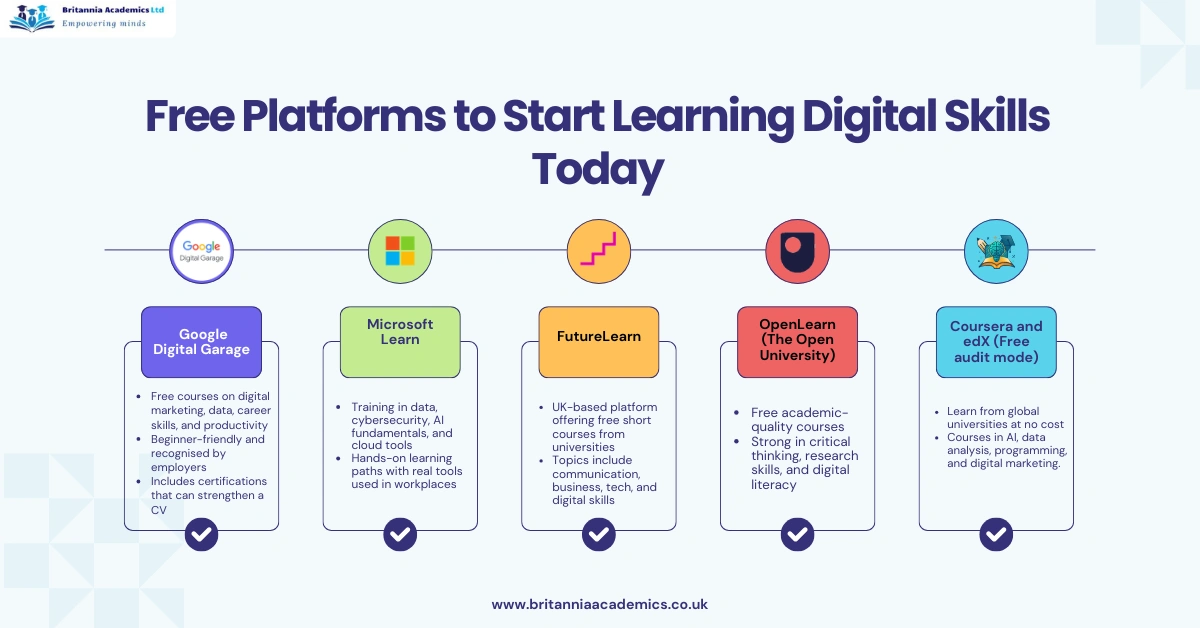
Students in the UK don’t need expensive courses or university programmes to build digital skills. Many globally recognised platforms, government initiatives, and tech companies provide free training designed specifically for beginners and students.
Free platforms to start learning today
Instead of trying to learn everything at once, students should follow a structured path:
Consistency matters more than intensity. Spending even 30–45 minutes daily on learning and practising digital skills can create noticeable progress within months.
The world is becoming more connected, and digital skills are essential for success. Students who learn AI, data analysis, digital communication, cybersecurity, content creation, and other digital skills will be better prepared for the future.
These skills are not only important for school projects but also for future jobs and personal growth. By embracing these skills today, students can create a strong foundation for a successful future in a digital world.
The future belongs to digitally skilled students, and it’s time to start learning these essential skills now.
AI literacy, data analysis, cybersecurity awareness, digital communication, content creation, digital marketing, e-commerce knowledge, and critical thinking.
Yes. Students should understand strong password practices, phishing awareness, data privacy, and safe browsing to protect their personal and academic information.
With consistent practice of 30–45 minutes daily, students can develop foundational digital skills within 3–6 months. Advanced skills require continued learning and practical application.
Absolutely. Skills like AI literacy, digital marketing, data analysis, and online communication are in high demand for remote and freelance opportunities globally.
Home Share On Social Media Do You Need A-Levels to...
Read MoreHome Share On Social Media How Many Universities Can You...
Read MoreHome Share On Social Media Part-Time vs Full-Time Degree in...
Read MoreHome Share On Social Media Top 10 Healthcare jobs in...
Read More