Britannia Academics

Image highlighted text about future trends in UK higher education for international students in 2026.

Share On Social Media

Future Trends in UK Higher Education For International Students in 2026

In 2026, UK higher education for international students will focus on employability, increased use of AI in learning, and more flexible study options, such as hybrid and career-focused degrees. Universities will prioritise skills-based education, expand industry partnerships, and offer more digital and global learning pathways. At the same time, students will need to be more strategic in their course selection, cost considerations, and post-study work opportunities.
The UK remains a leading study destination, but the landscape is becoming more competitive and outcome-driven. International students who understand these changes early – especially around visas, job prospects, and flexible learning- will have a significant advantage.
In this article, we break down the key trends shaping UK higher education in 2026 and what they mean for your academic and career journey.

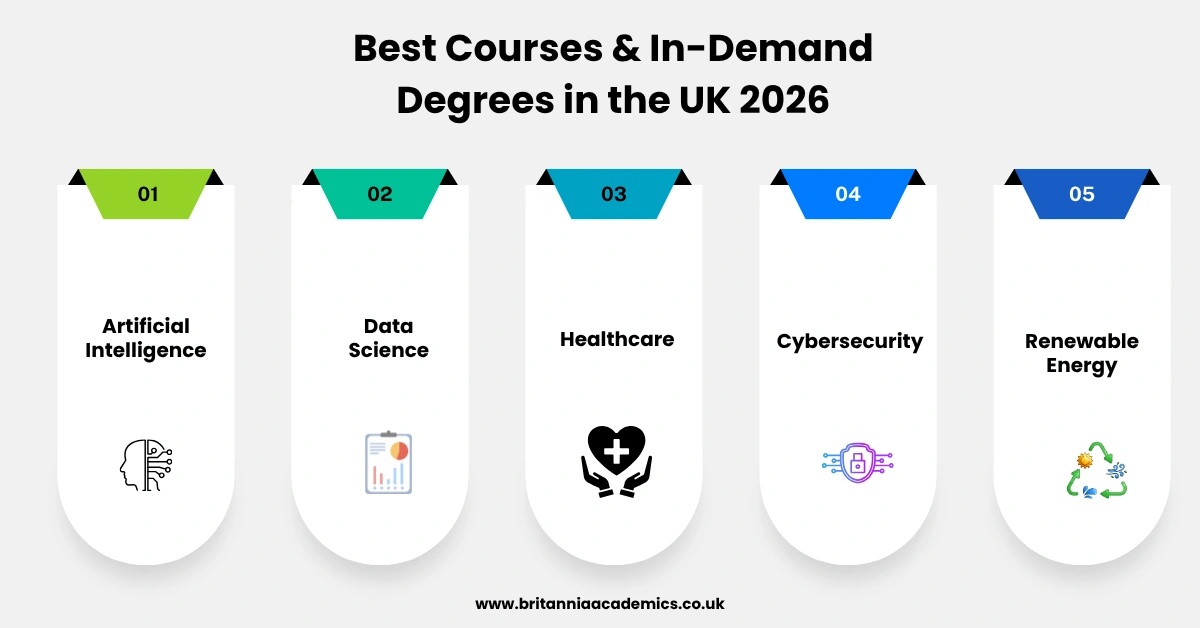
Best Courses & In-Demand Degrees in the UK 2026

Infographic showing the top 5 in-demand degree courses in the UK for 2026: Artificial Intelligence, Data Science, Healthcare, Cybersecurity, and Renewable Energy.
In 2026, the value of a degree is increasingly tied to employability. Universities are prioritising courses that directly align with job market demands.

Programs in fields like:

  • Artificial intelligence,
  • Data science,
  • Healthcare,
  • Cybersecurity and renewable energy are seeing massive growth.

Additionally, high‑demand degree insights help international students choose the right path for career success in 2026 and beyond.

Key shift:

  • Degrees are no longer just academic-they are career pathways.

Integration of AI and Digital Learning Technologies

Artificial Intelligence is transforming how students learn in the UK. Universities are adopting AI-powered platforms that personalise learning experiences, automate assessments, and provide real-time feedback.

Hybrid learning models, combining online and in-person education, are now standard.

Benefits for international students:

  • Flexible learning options
  • Access to recorded lectures and digital resources
  • Enhanced academic support through AI tools

Increased Focus on Graduate Employability and Outcomes

UK universities are under growing pressure to demonstrate strong employment outcomes. As a result, institutions are investing heavily in career services and industry partnerships. Placement years, internships, and real-world projects are becoming essential parts of degree programs.
What to look for:
  • Courses with built-in work placements
  • Strong employer partnerships
  • High graduate employment rates.

International students can also benefit from professional guidance like our Student Consultancy UK service; our local expert will help you choose the right universities, course combinations, and future career strategies.

Tuition Fees, Scholarships, and Financial Trends

While tuition fees for international students are expected to rise slightly in 2026, universities are also expanding scholarship opportunities to remain competitive.
Living costs, especially in major cities, remain a key concern.

Smart strategies:

  • Apply early for scholarships
  • Consider universities outside major cities
  • Plan a realistic budget, including living expenses

For more on financial planning and eligibility, check out our guide on Student Finance England and UK student funding to understand different support options available for students.

Growth of Transnational Education and Global Campuses

UK universities are expanding their global presence through overseas campuses and partnerships. Many institutions now offer the option to start a degree in your home country and complete it in the UK.

Online UK degrees are also becoming more credible and widely accepted.

Why this matters:
  • More flexible study options
  • Reduced initial costs
  • Increased global accessibility

Sustainability and Green Campus Initiatives

UK universities are leading efforts in environmental responsibility, offering courses focused on climate change and operating eco-friendly campuses. Students are increasingly choosing institutions based on their sustainability commitments.

Student Experience and Support Services Evolution

Student well-being is receiving greater attention in 2026. Universities are improving mental health services, academic support, and cultural integration programs. Digital student services—available 24/7—are also becoming standard.

What to expect:

  • Better onboarding for international students
  • Enhanced support systems
  • More inclusive campus environments

The UK Office for Students publishes an analysis of student experience and satisfaction, showing how support infrastructure impacts overall academic success.

Regional Universities Gaining Popularity

While London has traditionally been the top choice, regional universities are gaining traction due to lower costs and high-quality education.

Cities outside London offer:

  • Affordable living
  • Strong academic programs
  • Better work-life balance

This shift is opening new opportunities for international students.

Future of Hybrid and Flexible Learning Models

Flexibility is the future of education. Students now expect the ability to choose how and when they study.

Universities are responding with:

  • Part-time degree options
  • Modular learning structures
  • Blended learning environments

This is especially beneficial for students balancing work and study.

Visa Policies and Post‑Study Work Opportunities

Understanding UK Student Visas in 2026

Visa policies play a critical role in the international student experience. The UK’s student visa system allows international students to study, work part‑time during term time, and access post‑study work opportunities.

The UK Government’s official guidance outlines the Graduate Route Visa, which enables international graduates to stay and work in the UK after completing their degree.

Work While Studying

Under current regulations, international students are typically allowed to work part‑time during the academic term and full‑time during scheduled breaks, offering opportunities to gain experience and supplement personal income.

Leveraging Post‑Study Work

The ability to work in the UK after graduation is a significant factor for many international students. Post‑study work experience can lead to professional networking opportunities, employer sponsorship, and potential long‑term career pathways in the UK.

Understanding visa requirements and planning is essential for international students who intend to build their careers abroad.

Conclusion: How International Students Can Prepare for 2026

The future of UK higher education is dynamic, competitive, and full of opportunity. However, success depends on preparation and informed decision-making.

Key takeaways:

  • Focus on career-oriented courses
  • Stay updated on visa policies
  • Choose universities with strong employability outcomes
  • Consider affordability and location carefully
  • Embrace digital and flexible learning options

If you’re planning to study in the UK in 2026, start early, research thoroughly, and align your choices with long-term career goals.

Frequently Asked Questions

Is the UK still worth it for international students in 2026?
Yes, if you choose high-demand courses and plan your career strategically.
AI, Data Science, Healthcare, Engineering, and Renewable Energy.

Yes, but competition is high. Skills and experience are key.

AI, Data Science, Healthcare, Cybersecurity, Renewable Energy.

Related Articles: