
Home Share On Social Media Top 10 Healthcare jobs in...
Read More

Admissions tutors for health and social care programmes are experienced professionals. Many have worked in the field themselves. They spot vague, copied-sounding language very quickly. Here is what they actually want to see:
The key word in all of these is evidence. Saying you are passionate or caring means nothing without a real example to back it up.
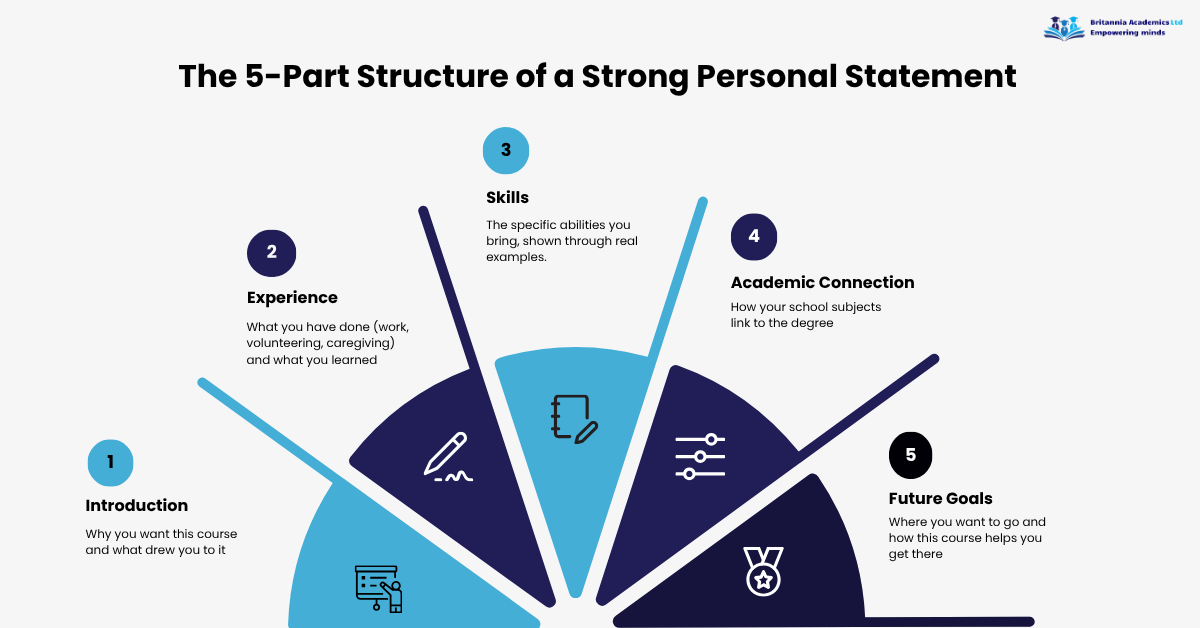
Think of your personal statement like a short story with a beginning, middle, and end. It should have a clear, easy-to-follow flow.
Here are the five parts every strong statement includes:
UCAS allows your statement to be up to 4,000 characters. Aim to use at least 3,500. If you are unsure about common pitfalls before you start writing.
Your first paragraph has one job: make the reader want to keep reading. The best openings are specific and personal. They describe a real moment – something you saw, felt, or experienced – that explains why you are drawn to this field.
What to avoid
These lines appear in so many applications that they have stopped meaning anything:
None of these are technically wrong. They are just invisible. They do not say anything specific about you. Replace them with something only you could have written.
What to do instead
Describe a real moment that changed how you saw the profession. You may have helped care for a family member and noticed how much kindness mattered. You could have volunteered at a place and seen a skilled carer make a real difference. Start there. Then connect it to why you are applying now.
Passion is not something you describe – it is something you show. Saying you are passionate about care means nothing on its own. Describing how you spent six months volunteering at a care home, or how learning about the NHS staffing crisis made you want to be part of the solution – that is something a tutor can work with.
Ask yourself these three questions when writing this section:
You do not need to be an expert on these issues. But showing that you pay attention to them tells the university you are serious. Understanding things like what health and social care graduates earn and where the sector is heading also demonstrates genuine engagement with your future career.
What counts as relevant experience
If you are still looking for placements, the NHS volunteering page is a good starting point. Many local councils also list social care volunteering through GOV.UK community volunteering portals.
How to write about it – the right way
Do not just list what you did. Reflect on what it taught you. That reflection shows real learning.
Instead of:
“I volunteered at a care home where I helped residents with meals and activities.”
Try:
“During six months volunteering at a care home, I learned how much it matters to adapt the way you speak to each person. One resident with dementia responded much better to open conversation than to direct questions. Learning to read those cues changed how I think about person-centred care.”
The second version is specific, shows what you learned, and proves you can think critically – exactly what universities want.
Subjects that link well include:
If you completed a project related to health or care, mention it.
Universities invest a lot in training health and social care graduates. They want to see that you have thought about what comes after the degree – not just that you plan to figure it out later.
You do not need a perfectly mapped-out career plan. But you should be able to say:
Not sure which career path fits you? The Britannia Academics career counselling service is designed to help students work through exactly this question.
A strong conclusion does three things:
Even strong applicants can damage a good application with avoidable errors. Watch out for these:
Go through each of these before you send your application. If the answer to any question is no, your statement needs another pass.
The applicants who succeed are not always the ones with the highest grades. They are the ones who can clearly and honestly show that they understand what this work involves, that they have engaged with it, and that they are ready to commit to the training a degree requires.
Start early. Write a messy first draft. Get feedback. Revise. Read it aloud. Revise again. If you want expert support through the whole application process, Britannia Academics offers a dedicated university application service and one-to-one student consultancy to help you put your best application forward.
Most importantly – be honest. Admissions tutors read hundreds of statements. They can tell when something is genuine. If your statement honestly reflects who you are, what you have done, and why this matters to you, you have already done the most important thing right.
Whether you are writing your very first draft or polishing your fifth, Britannia Academics will help you put your best self on the page – at absolutely no cost to you.
👉 Claim your free personal statement review from Britannia Academics today.
Write about your motivation for the field, relevant work or volunteering experience, key skills like communication and empathy, academic subjects that connect to the course, and your career goals – all backed by specific real examples.
Yes – most universities expect it. Care home volunteering, NHS roles, community support, or caring for a family member all count. Reflect on what each experience taught you, not just what you did.
Home Share On Social Media Top 10 Healthcare jobs in...
Read MoreHome Share On Social Media 13 Best Highest-Paying Entry-level Jobs...
Read MoreThe most employable UK degrees for international students in 2027...
Read MoreQuick Overview: UK higher education has its own set of...
Read More