
Want to study in the UK? Learn how education consultants...
Read More

The average salary for Health and Social Care graduates in the UK in 2026 typically ranges from £24,000 to £32,000 per year in entry-level roles. Many graduates begin their careers as healthcare assistants, support workers, or community care workers.
With experience and additional qualifications, salaries can increase to £38,000 or more, while senior professionals and managers may earn £50,000 to £70,000+ per year.
This guide explains more about the average salary of Health & Social Care graduates in the UK in 2026, including entry-level pay, salary growth, popular career roles, NHS pay bands, and long-term earning potential.
In 2026, most Health & Social Care graduates in the UK earn between £24,000 and £32,000 in their first jobs. Pay grows steadily as you gain experience and skills.
Many graduates begin their careers after completing programmes such as the Higher National Diploma in Health and Social Care Practice, which prepares students for roles in hospitals, community care services, and support work environments.
Here is a quick overview of salary ranges by career stage:
|
Career Stage
|
Typical Salary Range
|
|---|---|
|
Entry-level roles
|
£24,000 – £27,000 per year
|
|
Mid-level professionals
|
£28,000 – £38,000 per year
|
|
Senior specialists/managers
|
£40,000 – £65,000+ per year
|
Keep in mind: These figures can vary by employer type, job role, and where you live in the UK.
There are three main types of employers in this sector:

Some roles in this sector pay very well. These are usually management, clinical, or specialist positions. You typically reach them after several years of experience.
|
Role
|
Typical Salary Range
|
|---|---|
|
Social Worker
|
£30,000 – £50,000+
|
|
Health Services Manager
|
£42,000 – £65,000
|
|
Clinical Service Manager
|
£45,000 – £65,000
|
|
Mental Health Practitioner
|
£35,000 – £52,000
|
|
Care Home Manager
|
£40,000 – £58,000
|
What Makes These Jobs Pay More?
There are three main reasons these roles offer higher salaries:
Here is a closer look at what different roles typically pay. Salaries can vary by employer and location.
|
Role
|
Average Salary
|
|---|---|
|
Healthcare Assistant
|
£24,000 – £27,500 per year
|
|
Care Worker / Support Worker
|
£24,000 – £27,000 per year
|
|
Social Worker
|
£32,000 – £50,000 per year
|
|
Mental Health Support Worker
|
£25,000 – £31,000 per year
|
|
Community Support Worker
|
£24,000 – £29,000 per year
|
Important note about social workers: Real-world pay is often higher than the table suggests. Glassdoor data from early 2026 puts the average UK social worker salary at £40,628. NHS social workers typically start at Band 6, which begins above £38,000.
Which Roles Are Best for New Graduates?
If you are starting, these are the most accessible roles:
As you gain experience, you can move into higher-paying roles like social work or care management.
If you work for the NHS, your pay is set by the Agenda for Change (AfC) system. This system makes pay fair and clear for all NHS staff.
How Does the System Work?
The AfC system uses numbered pay bands from 1 to 9. Here is what you need to know:
|
Band
|
2025/26 Starting Pay
|
Typical Roles
|
|---|---|---|
|
Band 2
|
£24,465
|
Healthcare assistant, care support worker
|
|
Band 3
|
£24,937 – £26,598
|
Clinical support worker, therapy assistant
|
|
Band 4
|
£27,485 – £30,162
|
Nursing associate, assistant practitioner
|
|
Band 5
|
£31,049 – £37,796
|
Newly qualified nurse, paramedic, OT
|
|
Band 6
|
£38,682 – £46,580
|
Social worker (NHS), junior charge nurse
|
|
Band 6
|
£38,682 – £46,580
|
Social worker (NHS), junior charge nurse
|
|
Band 7
|
£47,810 – £54,710
|
Advanced practitioner, service manager
|
2026 Pay Rise: From 1 April 2026, all NHS staff will receive a confirmed 3.3% pay increase. This raises all band salaries shown above. It is the first on-time NHS pay award in six years.
Where you work can make a big difference to your pay. Here is how location affects Health & Social Care salaries:
London
South East England
Northern England, Wales, and Scotland
Health and Social Care is one of the fastest-growing sectors of employment in the UK.
According to Skills for Care, the UK social care sector employs more than 1.59 million people, with ongoing staff shortages.
Several trends are driving job demand:
Because of these factors, graduates entering the sector often find strong job availability across the UK.
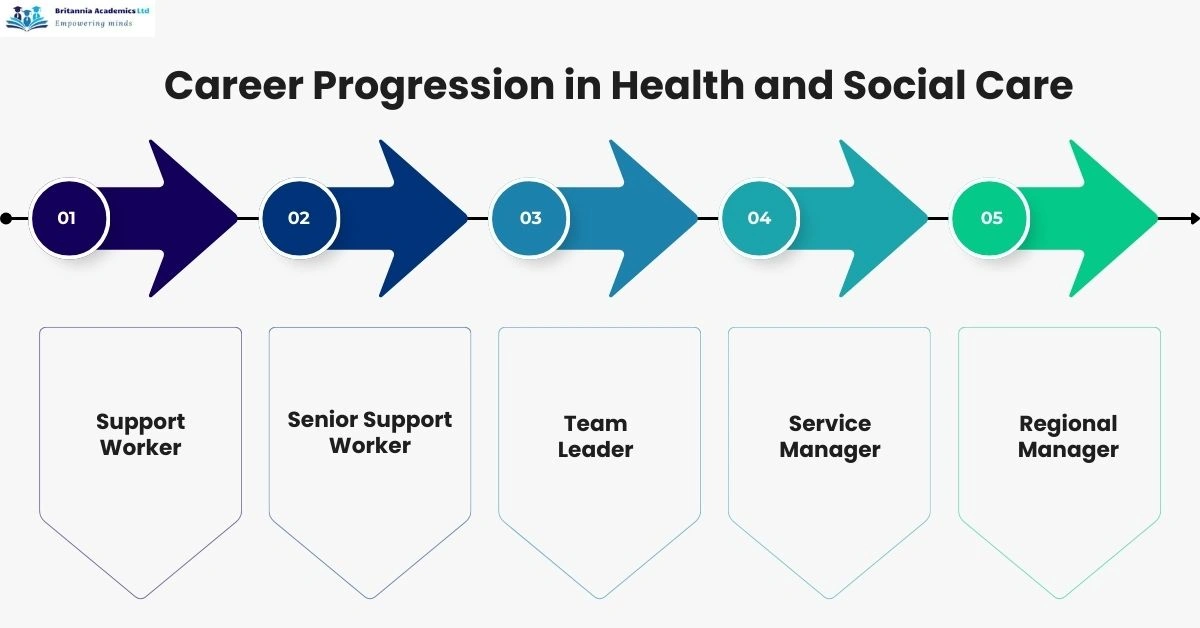
The sector offers clear progression opportunities.
A typical career path might look like this:
Support Worker → Senior Support Worker → Team Leader → Service Manager → Regional Manager
Leadership roles can pay £50,000 to £70,000 or more, especially in large healthcare organisations or NHS management.
Pay is only part of the picture. Health and Social Care jobs — especially in the NHS — come with great extra benefits.
Financial Benefits
Career and Personal Benefits
Stability Benefits
Health and Social Care is a strong career choice for UK graduates in 2026. Here is a quick summary of what you have learned in this guide:
If you are considering studying this field, you can explore available courses through our expert guidance on studying Health & Social Care in the UK.
Entry-level salaries range from £24,000 to £27,000, with NHS Band 2 or 3 as typical starting points.
High-paying roles include Health Services Manager, Clinical Service Manager, and senior social workers, earning £50,000–£70,000+.
NHS roles are structured from Band 2 to Band 9, with salaries increasing with experience and responsibility.
London roles include a 15–20% High Cost Area Supplement, which boosts salaries for roles such as social workers and managers.
Yes. Entry-level: £24k–£27k, mid-career: £28k–£38k, senior roles: £50k+.
Want to study in the UK? Learn how education consultants...
Read MoreDigital skills UK students needs in 2026: AI, data, cybersecurity,...
Read MoreExplore the top 10 benefits of hiring an education consultant...
Read MoreFind out when UK university students should start career counselling,...
Read More