Britannia Academics

Career Counselling for UK University Students - Britannia Academics LTD UK

Share On Social Media

Career Counselling for UK University Students: How Early Should Start?

UK university students should start career counselling in their first year — and ideally begin developing basic career awareness even before they arrive on campus. Starting early gives students more time to explore career paths, choose the right modules, build employable skills, and secure internships before competition intensifies in the final year.

The cost of making the wrong career decision — whether it’s choosing the wrong degree, missing internship opportunities, or delaying professional preparation — can mean wasted time, financial strain, and lower confidence going into a turbulent job market.

Early career guidance helps students:

  • Clarify their goals and study pathways
  • Improve employability with strategic experience
  • Reduce stress and uncertainty through informed choices

When Do UK University Students Typically Start Thinking About Careers?

Many UK students begin thinking about careers in their second or even final year of study. This delay often results from:

  • Focus on academic adjustment
  • Uncertainty about future options
  • Misconceptions about when career services are useful

Why Students Delay Career Planning

Most students think, “I will do career planning in my final year, this is not for now” Students commonly postpone career planning because they:

  • Believe professional preparation isn’t needed until graduation nears
  • Assume career advice is only for CV help
  • Focus on studies without knowing how to link them to real careers

Risks of Late Decision-Making

Delaying career planning increases risk:

  • Missing internship deadlines
  • Entering job markets without a clear direction
  • Reduced confidence and preparedness compared to early planners

Data-Driven Insight Into Graduate Outcomes

Research shows that students with work experience report:

  • Feeling better prepared for employment
  • Higher confidence in career decisions
  • Stronger job prospects compared to students without internships

Surveys from organisations like Prospects show that work experience (including internships) significantly influences perceived employability: students with experience feel more prepared for the workplace and employers report better skills and attitudes among those with internships

How Early Should Career Counselling Start for UK University Students?

Ideal Starting Points

1. Pre-University (Before Arrival)
Students benefit from early career exposure — such as exploring sectors and skills — even before university begins. This gives them a head start on planning modules, work experiences, and potential study pathways.

Pairing this with early Our Professional 1:1 Academic Mentorship gives students clarity long before pressure hits.

2. First Year (Critical Baseline)
Career awareness should begin in the first year, when students are still shaping their academic identity. Early interaction with career services helps align interests with real job markets and avoids wasted time on unfocused choices.

3. Second Year (Strategic Development)
By the second year, students should use counselling to choose internships, refine resume skills, and target relevant experiences.

Why First Year Matters Most

Students who engage with careers support early:

  • Gain clarity about options before choices tighten
  • Build important skills gradually rather than under final-year pressure
  • Avoid rushed decisions that cost opportunities later

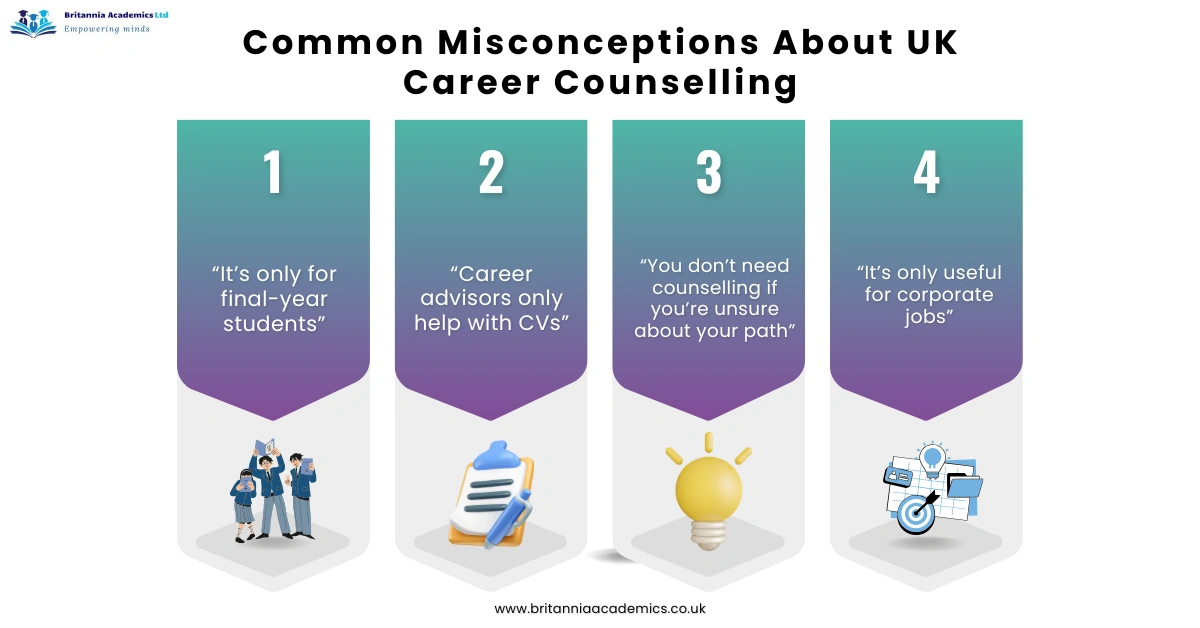
Common Misconceptions About UK Career Counselling

Common Misconceptions About UK Career Counselling - Britannia Academics LTD UK

1. “It’s only for final-year students”

FALSE — career counselling is most effective when it’s long-term, not last-minute.

2. “Career advisors only help with CVs”

Career advisors help with:

  • Goal setting
  • Industry understanding
  • Skill mapping
  • Networking strategy

3. “You don’t need counselling if you’re unsure about your path”

Uncertainty is exactly when support is most valuable.

4. “It’s only useful for corporate jobs”

Career counselling is relevant for all paths — from entrepreneurship to creative careers and technical apprenticeships.

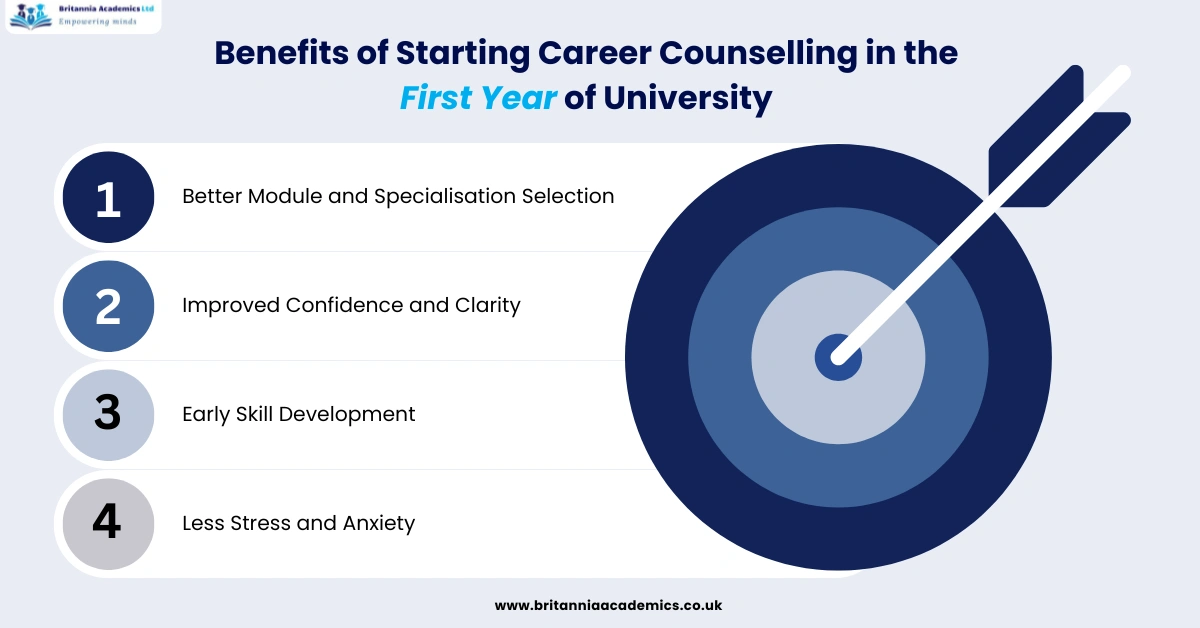
Benefits of Starting Career Counselling in the First Year of University

Benefits of Starting Career Counselling in the First Year of University - Britannia Academics LTD UK

1. Better Module and Specialisation Selection

Students who plan early make smarter academic choices aligned with career outcomes.

2. Improved Confidence and Clarity

Early counselling helps students define direction rather than react to deadlines later on.

3. Early Skill Development

High-value skills such as digital literacy, analytical thinking, and communication can be developed proactively.

4. Less Stress and Anxiety

Early action reduces the panic and pressure that often come in the final year when decisions must be rushed.

Career Counselling in the Second Year: A Critical Turning Point

The second year is where strategy becomes actionable.

1. Refine Career Interests

Students can use counselling to focus on specific industries, roles, and career paths.

2. Target Internships and Placement Opportunities

Getting placements early sets up stronger graduate outcomes.

3. Build a Professional CV and Digital Profile

Counsellors help optimise LinkedIn and CVs before final year applications begin.

4. Spot Skill Gaps Early

Identify what skills employers want — and start building them before it’s too late.

Is Final-Year Career Counselling Too Late?

What It Still Achieves

Final-year support can still:

  • Help with applications
  • Prepare for interviews
  • Refine goals

What It Can’t Fix

But it struggles to make up for:

  • Lack of work experience
  • Missed early networking
  • Less time to develop competitive skills

Why Early Starters Gain an Edge

Students who plan early:

  • Are you more prepared for competitive graduate schemes
  • Have real experience to show
  • Enter the market with confidence and clarity

The Role of Career Counselling in Choosing the Right Degree Path

Career counselling helps students:

  • Avoid degree–career mismatches
  • Understand transferable versus specialised skills
  • Make informed choices about switching courses or postgraduate options
  • Plan potential second degrees or certifications

Skills UK Employers Look For—and How Counselling Helps Build Them Early

Technical Skills vs Soft Skills in the UK Employment Market

Employers value a balance of:

  • Technical knowledge
  • Communication
  • Problem-solving
  • Commercial awareness

Growing Importance of Digital, Analytical, and Communication Skills

According to the World Economic Forum, digital and analytical skills are among the fastest-growing requirements across industries.

How Counsellors Help Students Map Skills to Career Paths

Students learn how to translate:

  • Academic work
  • Part-time jobs
  • Projects

into employer-relevant skills.

Using Extracurricular Activities Strategically

Counselling helps students choose activities that strengthen employability—not just fill time.

Challenges UK Students Face When Starting Career Planning Too Late

  • Limited access to competitive internships
  • Heightened stress during job hunting
  • Unclear career direction
  • Missed chances to network and grow skills

Final Thoughts: Starting Early Is a Career Advantage

Starting career counselling early — as early as first year — leads to:

  • Better alignment of the study with work goals
  • Competitive job readiness
  • Greater confidence and direction

Students who act early gain lifelong advantages in strategies, skills, and opportunities. Don’t wait. Begin exploring career options, connect with advisers, and map your journey from day one — because early planning isn’t extra, it’s essential.

If you want a head start, check out our Career Counselling for UK Students and build your future with confidence.

Frequently Asked Questions

1. When should UK university students start career counselling?

UK university students should ideally start career counselling before university or in their first year. Early guidance helps students choose the right modules, build relevant skills, and prepare for internships well before final-year competition increases.

Absolutely. Career counselling is especially helpful for students who feel uncertain or undecided. Counsellors help clarify interests, identify strengths, and explore multiple career pathways without pressure.

No. While CV support is included, career counselling also covers:

  • Career goal setting
  • Industry and labour-market insights
  • Skill development planning
  • Networking strategies
  • Postgraduate and alternative career pathways

Yes. Career counselling supports a wide range of paths, including:

  • Entrepreneurship
  • Creative industries
  • Technical and vocational careers
  • Freelancing
  • Further study or research

It helps students align their skills and interests with realistic opportunities.

Career counsellors help students:

  • Identify suitable internships early
  • Understand application timelines
  • Prepare strong applications
  • Build experience strategically before the final year

This greatly improves graduate employability.

Yes. Career counselling helps students assess:

  • Degree-career alignment
  • Transferable skills
  • Course changes or specialisations
  • Postgraduate or certification options

Early guidance can prevent long-term academic and career mismatches.

Related Articles: