Quick Overview: UK higher education has its own set of...
Read More

Computer Science, Nursing, Engineering, Accounting and Finance, and Data-related degrees are among the strongest options for UK students entering the job market in 2027.
However, the best choice depends on what matters most to you:
The latest HESA Graduate Outcomes data shows that 87% of 2023/24 graduates were in work or further study around 15 months after leaving higher education. Outcomes also vary considerably by subject, which is why students should look beyond university rankings when choosing a degree.
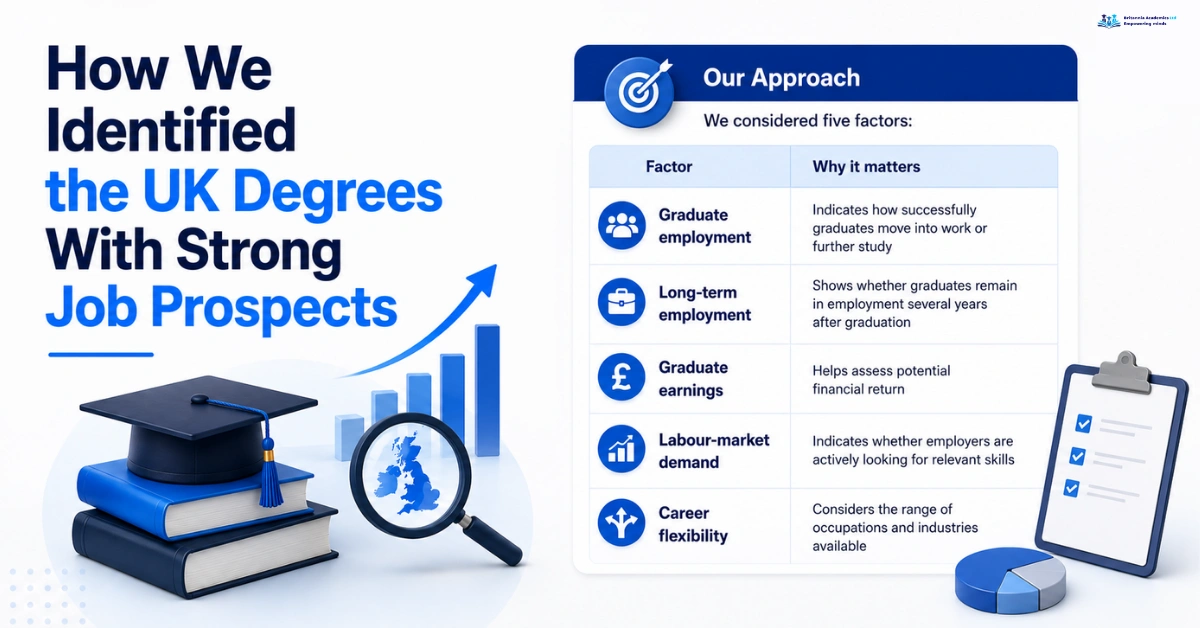
A degree’s career prospects cannot be measured by starting salary alone.
We considered five factors:
|
Factor
|
Why it matters
|
|---|---|
|
Graduate employment
|
Indicates how successfully graduates move into work or further study
|
|
Long-term employment
|
Shows whether graduates remain in employment several years after graduation
|
|
Graduate earnings
|
Helps assess potential financial return
|
|
Labour-market demand
|
Indicates whether employers are actively looking for relevant skills
|
|
Career flexibility
|
Considers the range of occupations and industries available
|
Computer Science and Software Engineering graduates have the strongest employment outcomes in the UK. According to Graduate Prospects, 95%+ of graduates achieve employment within six months of graduation. Starting salaries for junior developers range from £30,000–£45,000, rising to £60,000+ within 3 years in senior roles.
Why this degree leads:
Key features:
Best for: Students comfortable with maths and problem-solving; those seeking remote flexibility
Note: Saturation is beginning in London-based junior roles. Northern England and Scotland have acute shortages.
Nursing graduates face zero unemployment – 100% employment guarantee within one month of completing degree registration with the Nursing and Midwifery Council (NMC). The NHS and private healthcare directly employ 95% of graduates. Band 5 nursing salaries start at £23,500, rising to £31,000+ by Band 6 (senior nurse).
The demand is structural: the NHS has 20,000+ unfilled nursing positions and recruits continuously regardless of the economic cycle.
If you’re exploring nursing career earnings, our guide on Health & Social Care graduate salaries breaks down realistic pay progression from Band 5 to specialist roles.
Why this degree guarantees employment:
Key features:
Best for: Candidates prioritising job security; those in Scotland/Wales (higher pay bands)
Reality check: Shift work is non-negotiable. Physical and emotional labour is significant. Career satisfaction depends heavily on workplace culture.
Accounting graduates rarely face unemployment. According to UCAS, 92% are employed or in further study within six months, with starting salaries of £28,000–£35,000. The path is clear: degree + ACA (Association of Chartered Accountants) qualification = £50,000+ by age 28.
Why this degree secures roles:
Key features:
Best for: Detail-oriented candidates; those seeking structured career progression; graduates targeting London/Southeast
Limitation: Audit roles are repetitive early on. Tax and advisory are more intellectually varied.
Engineering graduates are in short supply. Employer demand exceeds the supply of qualified graduates by 3:1 through 2027. Starting salaries range from £28,000–£38,000, with Chartered Engineer status (CEng) delivering £55,000+ within 5 years.
Why this degree has long-term demand:
Key features:
Best for: Candidates with strong maths/physics; those interested in infrastructure, energy, or manufacturing
Note: Civil engineering is concentrated in London/Southeast. Mechanical and chemical engineering has a better geographic spread across the Midlands and the North.
Data Science graduates are increasingly hired as salary grades rise. Starting salaries have jumped from £26,000 (2023) to £32,000–£42,000 (2026) as demand accelerates, and significant growth across financial services, healthcare, and retail.
Why this degree grows rapidly:
Key features:
Best for: Candidates comfortable with coding and statistics; those seeking flexibility and rapid salary growth
Caution: The market is becoming more crowded; bootcamp graduates now compete with degree holders. University reputation matters more here than in pure technical fields.
|
Degree
|
Starting Salary
|
Career Ceiling
|
Best For
|
|---|---|---|---|
|
Computer Science
|
£30,000–£45,000
|
£100,000–£150,000+
|
Remote workers, tech preference
|
|
Nursing
|
£23,500–£26,000
|
£31,000–£42,000
|
Job security, shift flexibility
|
|
Accounting
|
£28,000–£35,000
|
£50,000–£80,000+
|
Structured path, Big Four
|
|
Engineering
|
£28,000–£38,000
|
£55,000–£90,000+
|
Infrastructure, energy focus
|
|
Data Science
|
£32,000–£42,000
|
£55,000–£100,000+
|
Analytics, rapid growth
|
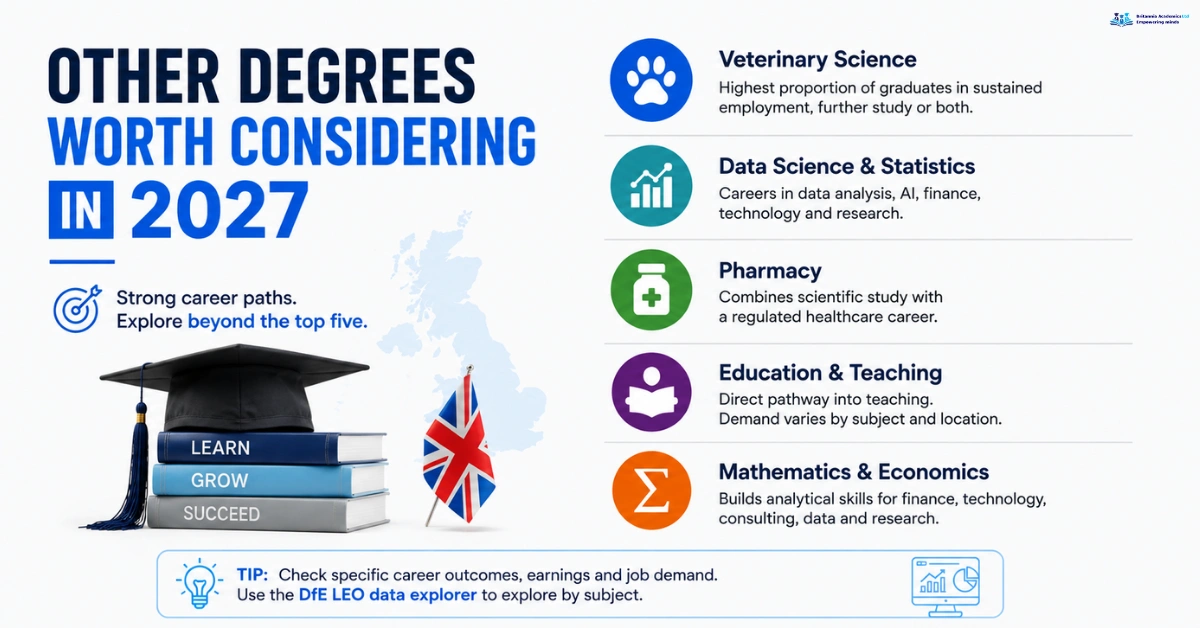
The five degrees above are not the only options with strong career prospects. The latest DfE Graduate Labour Market Outcomes data covers 35 subject areas, with clear differences in employment and graduate earnings.
Other subjects worth exploring include:
Tip: Don’t judge a whole subject as simply “good” or “bad” for employment. Check the specific career outcomes, earnings and job demand for the degree you are considering.
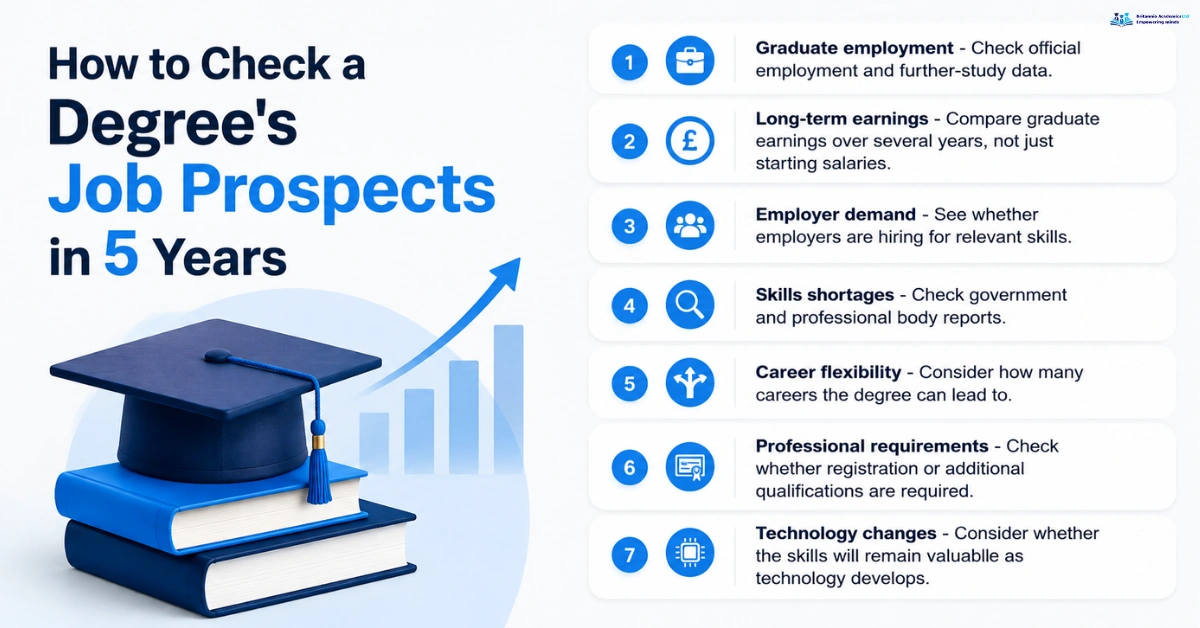
No one can predict the job market perfectly, but you can look at these key factors:
The degree with the highest starting salary is not always the best choice.
Before choosing a UK degree for 2027, consider:
The best degree is one that combines strong career prospects, skills you can develop, and a career you genuinely want to pursue.
Computer Science and Software Engineering lead with 95%+ employment rates and starting salaries ranging from £30,000 to £45,000. Nursing guarantees 100% placement but with lower starting pay (£23,500). Your choice depends on whether you prioritise salary or job security.
UK degrees carry immediate work rights and are recognised by UK employers – significant advantages. International degrees require visa sponsorship (£42,500+ employer cost) and face hiring bias. UK degree = no friction.
For tech and finance, the top 20 UK universities secure 15–20% higher starting salaries. For nursing and engineering, university ranking matters less; professional accreditation and course content matter more.
Bootcamps (3–6 months, £12,000–£20,000) produce job-ready developers faster and at lower cost. Degrees provide deeper theory, employer prestige, and backup career options. Bootcamp + 1-year experience = same salary as a graduate; bootcamp without experience = £5,000–£8,000 less starting pay.
Computer Science, Data Science, and Accounting all offer remote work standards and salary parity across the UK. Nursing and civil engineering are location-dependent; roles in London typically pay more, with additional allowances.
Quick Overview: UK higher education has its own set of...
Read MoreQuick Overview: UK higher education has its own set of...
Read MoreQuick Overview: UK higher education has its own set of...
Read MoreQuick Overview: UK higher education has its own set of...
Read More